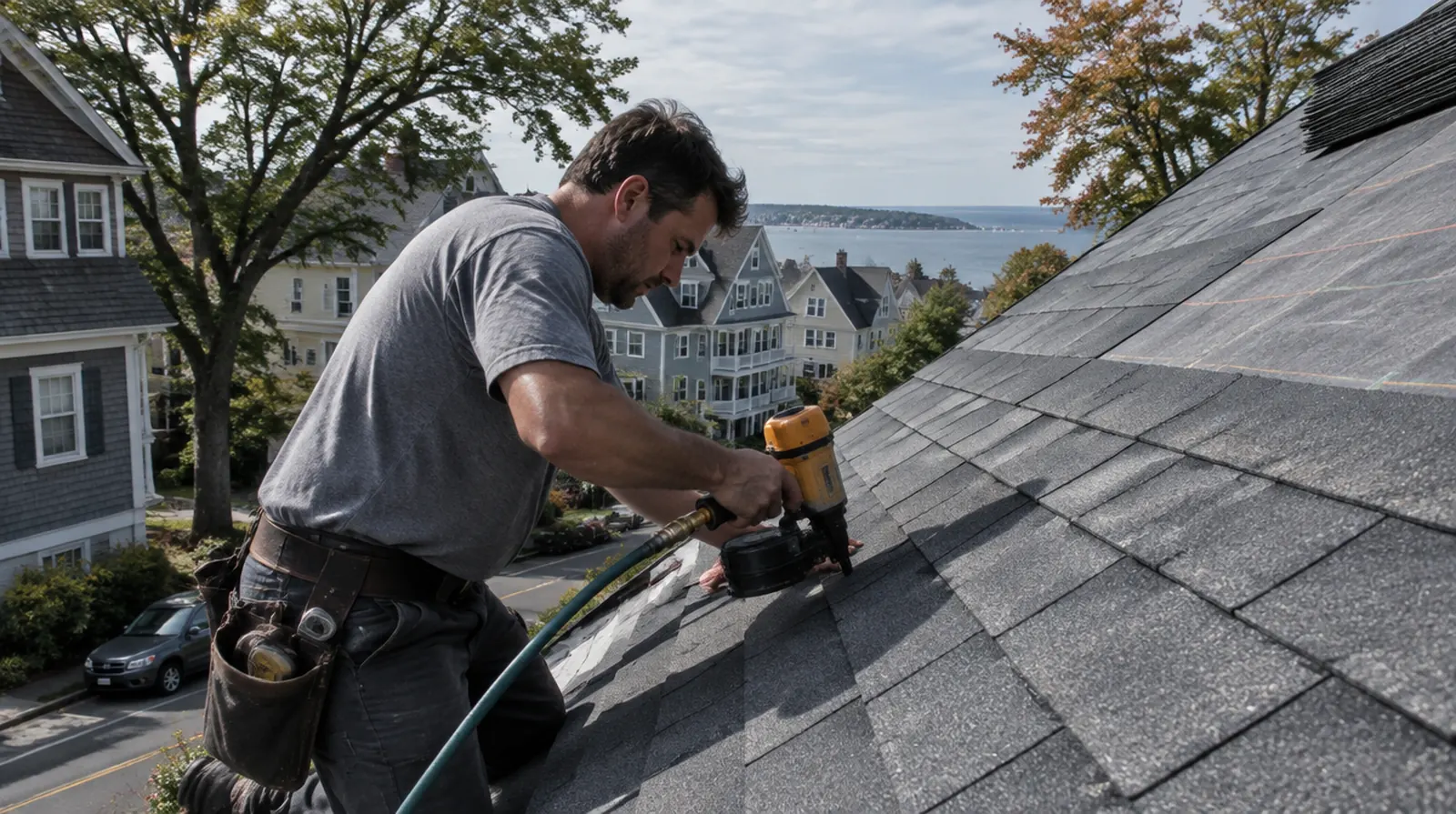
Why asphalt shingle roofing works in Quincy
Architectural shingles balance cost, durability and appearance well. They resist wind better than older three-tab shingles, come in colors that suit historic and modern homes alike and are straightforward to repair after storm damage. They also handle the steep pitches common on Quincy's older homes.
On homes near the water, wind resistance matters most. On homes under big shade trees, algae-resistant shingles help keep north slopes from streaking.
Our asphalt shingle installation
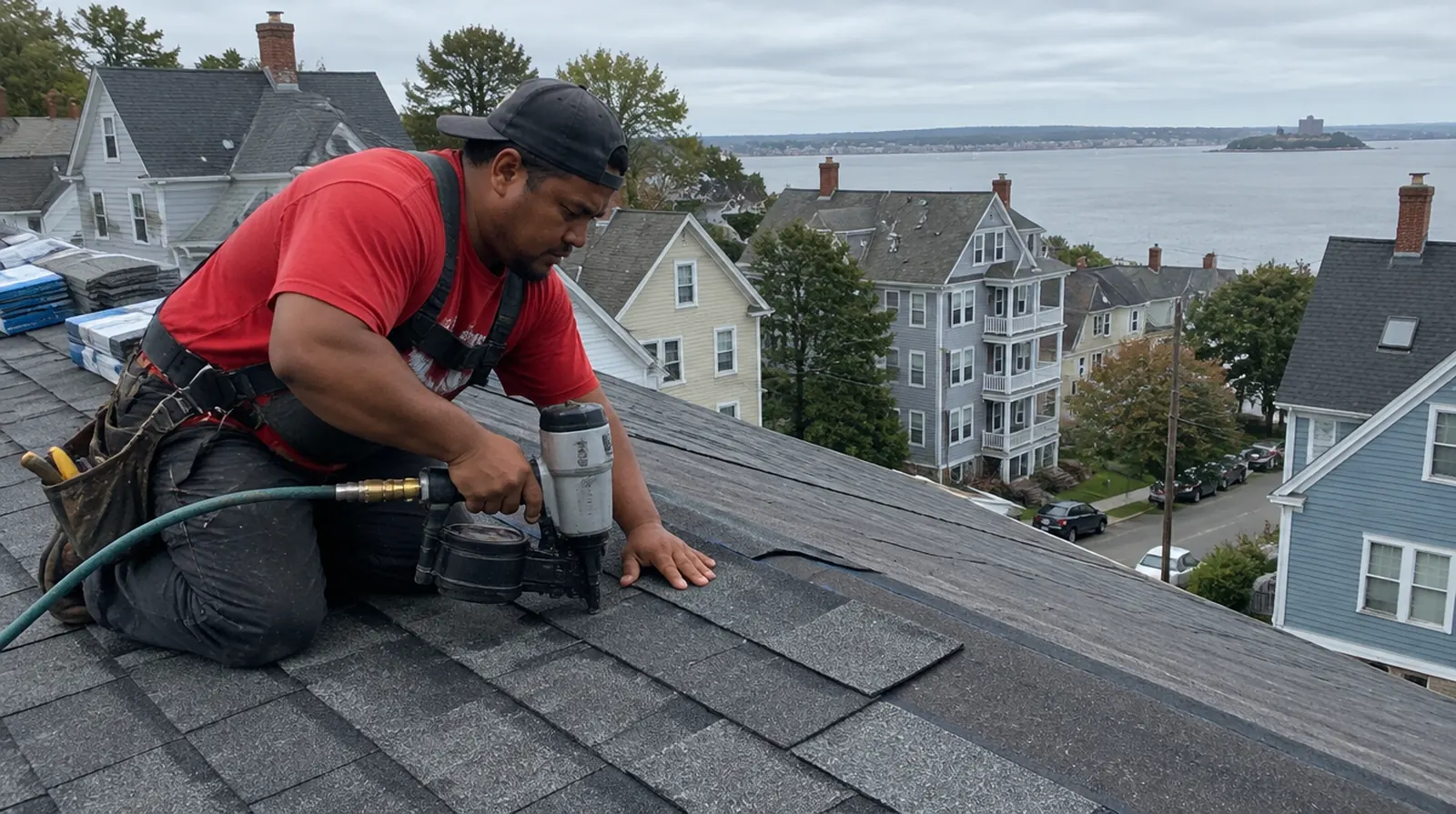
We remove all old layers down to the deck. Board sheathing with gaps or damage is repaired or covered with plywood. Then comes drip edge, ice barrier at the eaves and in valleys, and synthetic underlayment across the remaining deck. New flashing is installed at chimneys, walls, dormers and skylights, integrated with each shingle course. Shingles are fastened to the manufacturer's pattern with starter strips at eaves and rakes and ridge caps at the top.
We also look at ventilation on every job, since a cold, dry attic is the best protection against ice dams. See our roof ventilation page for more.
Asphalt shingle roofing on steep and complex roofs
Victorians and older colonials in Wollaston and Quincy Center often have steep gables, multiple dormers and intersecting roof planes. We stage these roofs with brackets and planks, use proper fall protection and take extra time at every valley and wall. On houses with character, we help you choose a shingle profile and color that fits.
Shingles for shoreline homes
In Squantum, Houghs Neck and along Wollaston Beach, we use corrosion-resistant nails and flashing and pay extra attention to edge metal, rake starters and ridge caps, the places where wind gets a grip.
Repairs to existing shingle roofs
Not ready for a new roof? We also handle roof repair on shingle roofs, from replacing torn shingles and resealing tabs to new pipe boots and ridge caps.
Shingle colors on older homes
Gray and charcoal shades suit many clapboard homes, while browns and weathered blends complement brick and older trim. We bring full-size samples so you can judge them in daylight.
Board sheathing under shingles
Many older Quincy roofs were built with wide boards rather than plywood. Over decades, those boards shrink, leaving gaps, and some crack or rot near the eaves. Shingles need a solid, even surface to lie flat and hold nails well. During a tear-off, we replace damaged boards and, where gaps are wide, add a layer of plywood over the boards so the new shingles have a sound base.
Dormers, valleys and wall flashing
Capes in Merrymount and Squantum often have shed or gable dormers that create short valleys and wall intersections. We line valleys with ice barrier and metal, step-flash every dormer cheek and add counter-flashing behind siding. Where a roof ends against a wall, a kick-out sends water into the gutter instead of behind the clapboards.
Installation day
Tear-off is loud, so plan to be out or in a quiet room. Clear cars from the driveway and street in front if you can. We clean daily and run a magnet sweep at the end.
Algae, moss and shade
North-facing slopes under Quincy's mature maples and oaks stay damp and grow dark algae streaks and moss. Moss can lift shingle edges as it spreads. We can clean affected areas gently, and on new roofs we suggest algae-resistant shingles and trimming back overhanging limbs where practical.
Every new shingle roof gets new pipe boots, new vent flashing and new drip edge, never reused parts from the old roof.
Shingle roofing FAQs
Do you install ice barrier?
Yes, at the eaves, valleys and penetrations on every replacement.
Can you shingle over my old roof?
We recommend a full tear-off, especially on older board decks.
How long does installation take?
Most single-family roofs take one to three days.
How do I get a quote?
Call (781) 773-2885.
Ready for new asphalt shingles?
Call (781) 773-2885 for a free asphalt roofing estimate.