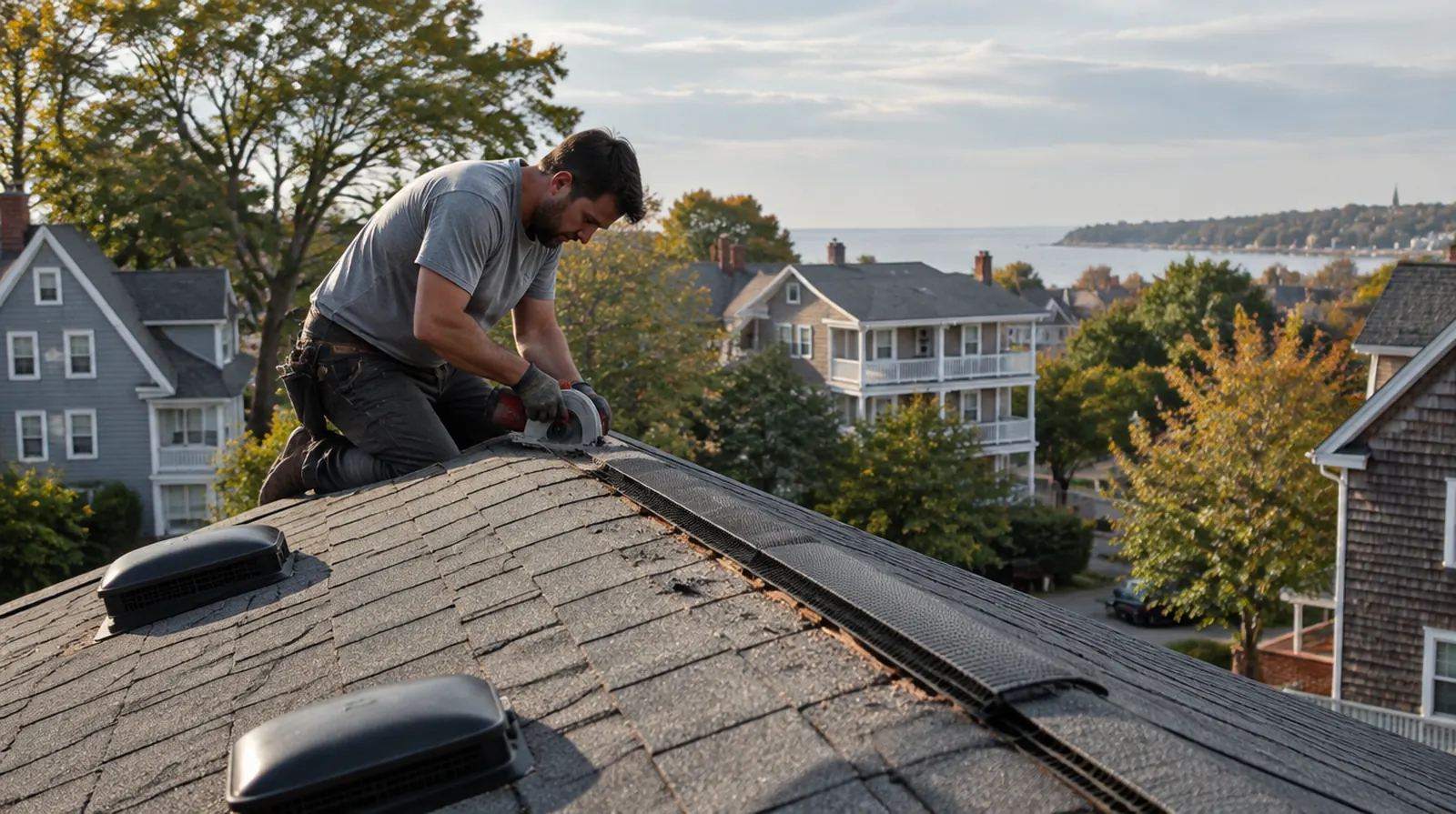
Why roof ventilation matters in Quincy
Warm, moist air from living spaces rises into the attic. Without ventilation, it warms the roof deck in winter, melting snow that refreezes at the eaves as ice dams. It also condenses on cold boards, leaving frost that melts into stains, damp insulation and mold. In summer, an unventilated attic gets very hot, shortening shingle life and making top-floor rooms uncomfortable.
Many Quincy homes have no soffit vents at all, or soffits sealed by paint and insulation. Others have a single gable vent or a ridge vent with no intake to feed it. These are fixable.
How we assess attic airflow
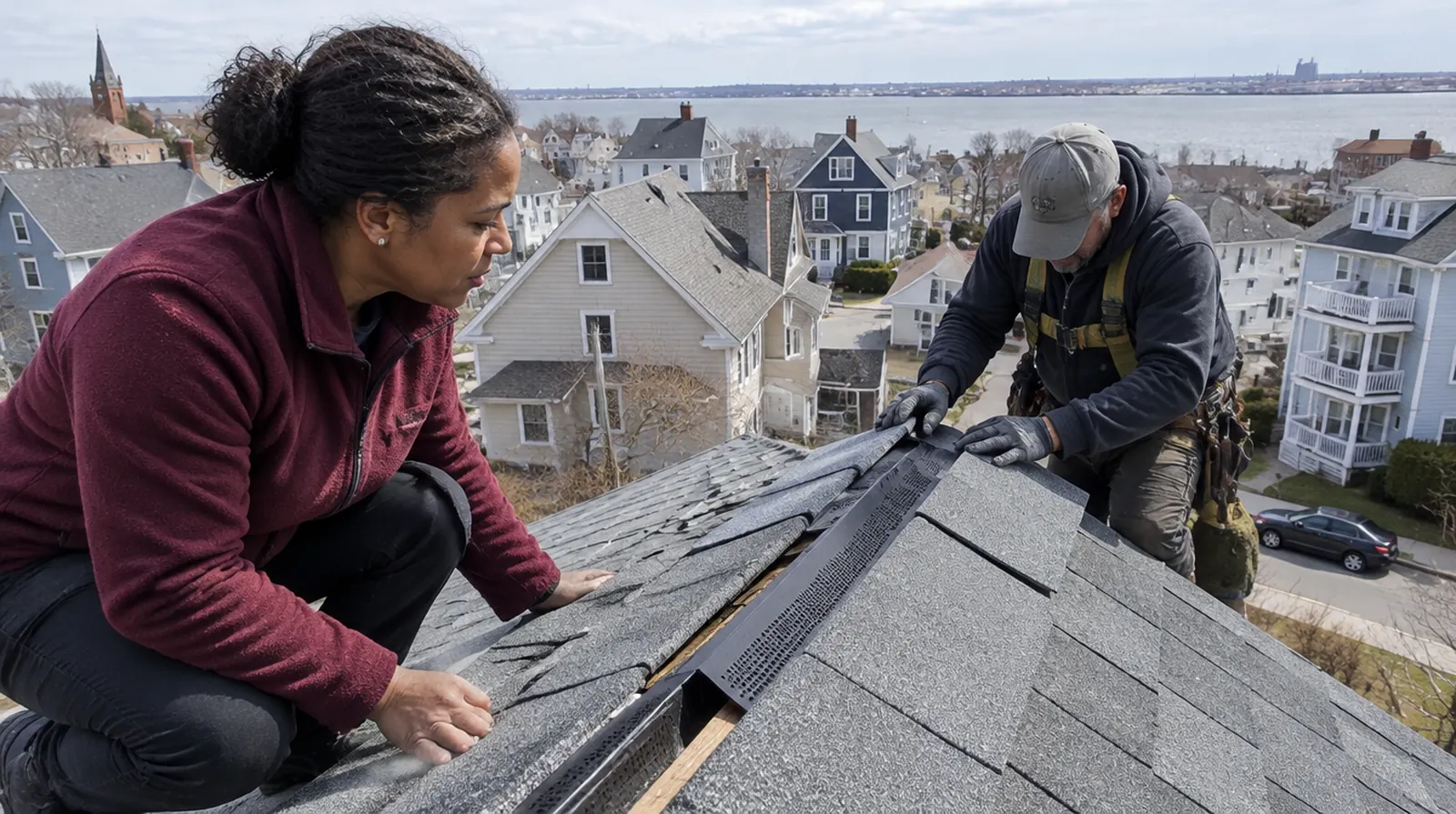
In the attic, we look for frost marks, dark stains on the boards, rusted nails, mold and damp insulation. We check whether soffits are open and whether insulation blocks them. We measure the attic and count existing vents. On the roof, we look at what exhaust is there and its condition.
Then we recommend a balanced system: intake at the eaves and exhaust near the peak, sized to the attic. That may mean cutting in soffit vents, installing baffles, adding a ridge vent or replacing mismatched vents.
Roof ventilation solutions we install
- Ridge vents. Continuous exhaust at the peak, ideal on most pitched shingle roofs.
- Soffit and eave vents. Intake that feeds the exhaust.
- Drip-edge intake vents. For homes with little or no soffit overhang, common on older houses.
- Box vents. For hip roofs and short ridges.
- Baffles. Keep insulation from blocking airflow.
Ventilating flat roofs and finished attics
Triple-deckers with low-slope roofs often have a shallow, unvented space under the roof. We can add vents designed for low-slope roofs where appropriate. Capes and homes with finished third floors have tight rafter bays that need clear channels from eave to ridge.
Ventilation with a new roof
A reroof is the easiest time to fix ventilation. Every replacement we do includes a ventilation plan. See how this ties in with our asphalt shingle installs.
Signs of poor ventilation
Ice dams, frost on attic nails, musty smells, peeling exterior paint near the eaves and very hot top floors all point to airflow problems. Water stains may be condensation rather than a leak, though our leak repair team can confirm.
Air sealing and bath fans
Ventilation works best when warm air is kept out of the attic in the first place. We point out gaps around hatches, chimneys and light fixtures, and check that bath fans vent outdoors rather than into the attic.
Comfort in top-floor units
Top-floor apartments in triple-deckers and two-families are often the hottest in summer and the most prone to ceiling stains in winter. Better ventilation and air sealing under the roof reduce both problems, making those units easier to rent and more comfortable to live in.
Timing ventilation work
The ideal time is during a reroof. Soffit vents, drip-edge intake and baffles can be added any time, though, and doing it before winter helps right away with frost and ice dams.
Moisture from basements and kitchens
Older Quincy homes often have damp basements and kitchens without range hoods vented outside. That moisture rises through the house and ends up in the attic. Along with adding ventilation, we look for these sources and suggest simple fixes, like venting the kitchen fan outdoors, so the attic stays drier through the winter.
When the work is done, we show you photos of each new vent and baffle and explain how air now moves from the eaves to the peak.
Roof ventilation FAQs
Can you add vents without a new roof?
Often, yes.
Will this stop ice dams?
It helps a great deal, especially with insulation and air sealing.
My house has no soffits. Can it be vented?
Yes, with drip-edge intake vents or other options.
How do I schedule?
Call (781) 773-2885.
Want the attic to breathe?
Call (781) 773-2885 for a roof ventilation look and estimate.