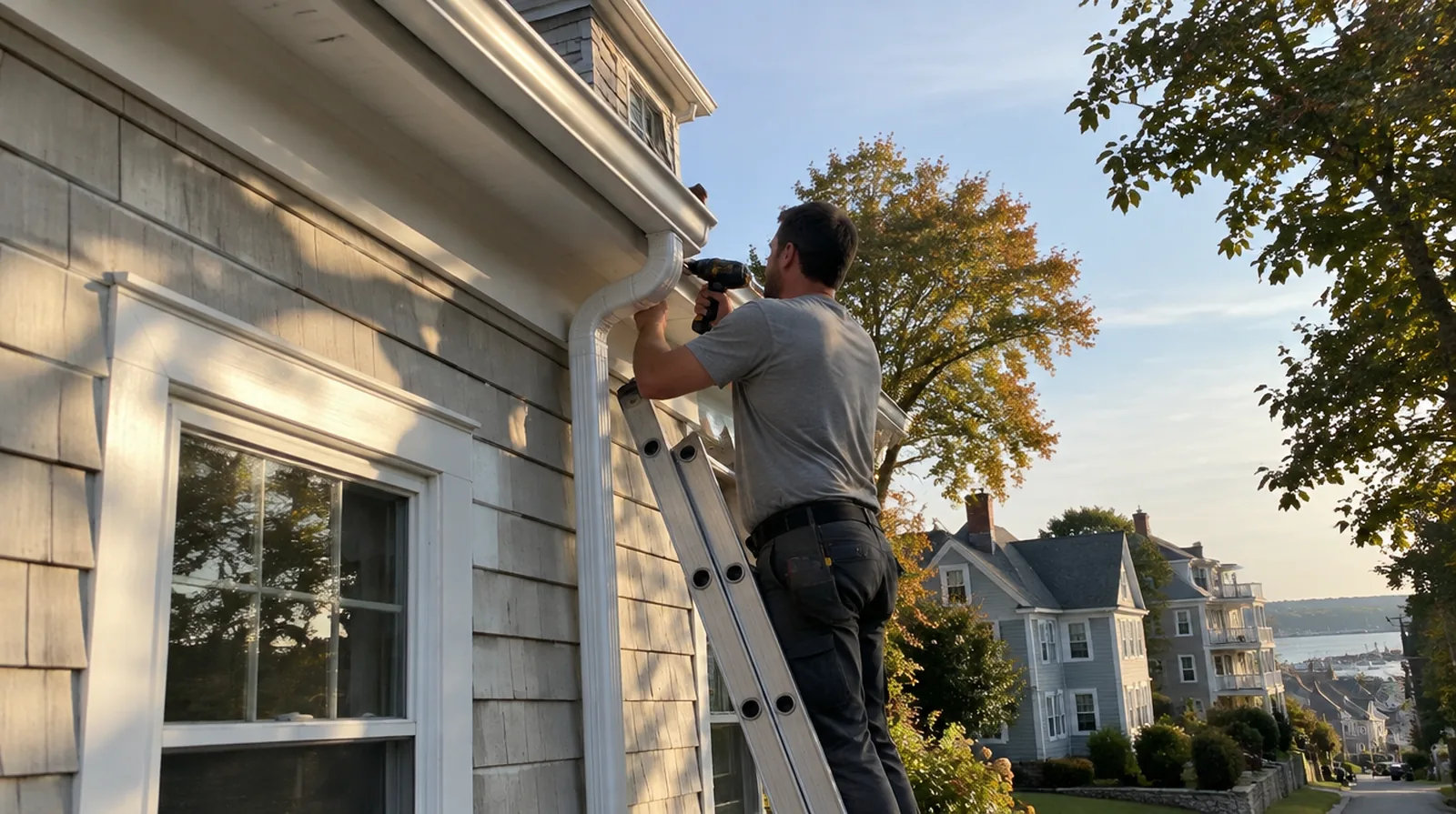
Why gutter installation matters in Quincy
Many Quincy homes have fieldstone or block basements that take on water when roof runoff soaks the soil along the foundation. Gutters that overflow or downspouts that empty against the house make that worse. Good gutters also protect wood siding, trim and porch structures, which rot quickly when they stay wet.
Older homes often have sectional or wood gutters, leaking corners and downspouts that disappear into old underground lines of unknown condition. We evaluate all of it.
How we install gutters
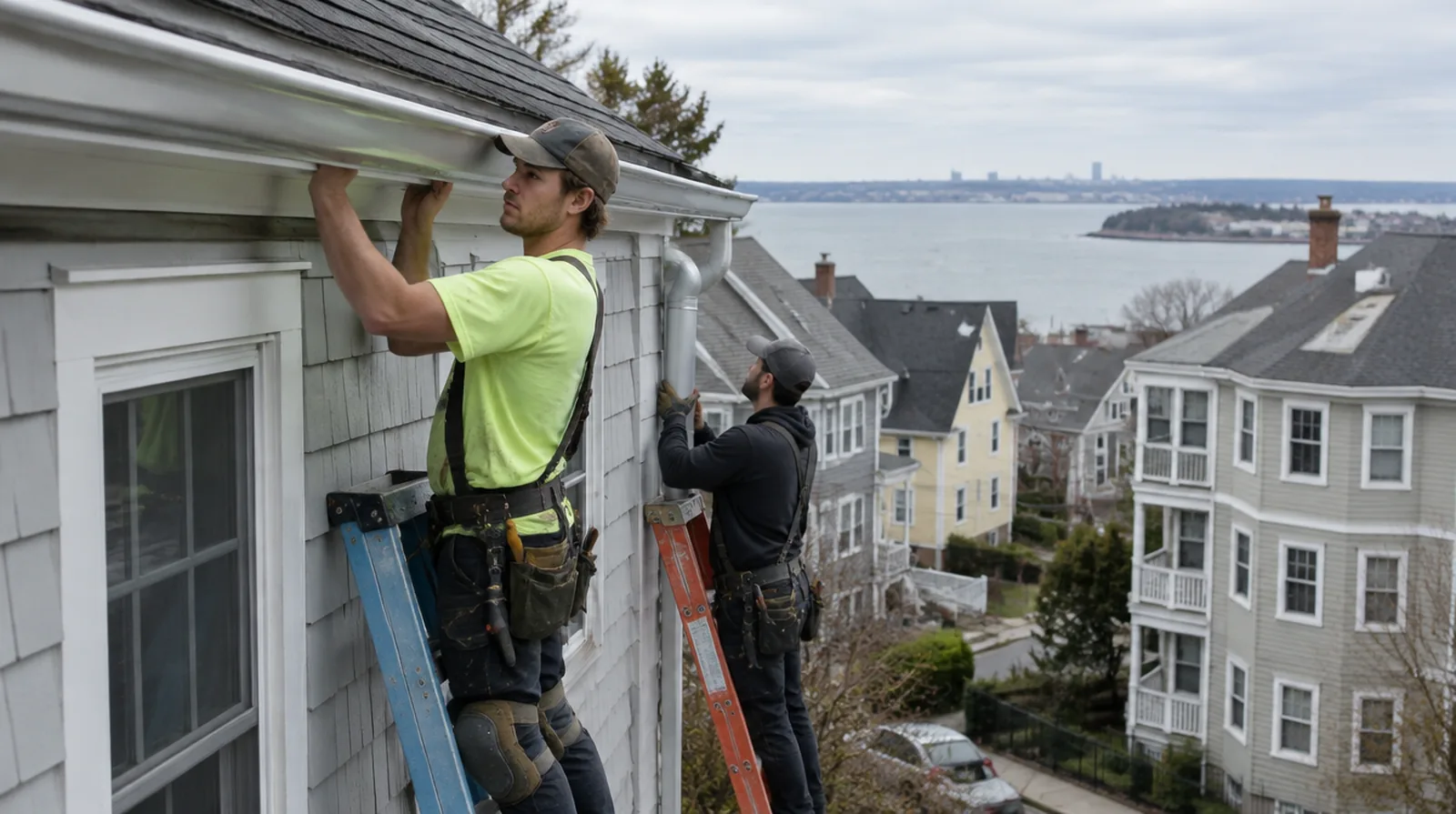
We look at the roof area draining to each edge, then size gutters and downspouts accordingly. Seamless aluminum gutters are formed on site to each run's exact length. They are hung with hidden hangers, pitched toward the downspouts and fastened into solid fascia.
Downspouts are placed where water can be carried away from the foundation. If there are old underground drain lines, we can test whether they flow; if not, we use extensions or splash blocks. We check fascia and drip edge before hanging anything.
For more on how seamless gutter installs work in general, that guide is a helpful overview.
Gutter installation on triple-deckers
Multi-family buildings with flat roofs often drain through a scupper to a conductor head and downspout, or through an internal drain. Porch roofs below have their own small gutters. We size and route each piece so water from three stories up reaches the ground without overflowing onto porches and stairs.
Gutters and ice dams
Gutters do not cause ice dams, but clogged gutters full of ice make them worse. Keeping gutters clean in late fall helps. The lasting fix is attic insulation, air sealing and ventilation. We look at both during an estimate, and we can coordinate gutter work with a roof replacement.
Salt air and materials
Along the shore, we use aluminum gutters with stainless or coated hangers and screws to resist corrosion.
Gutter guards
If your house sits under big maples or oaks, gutter guards can reduce cleanings. We can explain the options and trade-offs.
Downspouts and fieldstone basements
Older homes with fieldstone foundations are especially prone to basement seepage. We extend downspouts several feet from the house where the yard allows, and on tight lots we route them toward driveways or walkways that slope away from the building. If old clay drain lines are present, we can check whether they still flow before tying into them.
Replacing wood gutters
Some older Quincy houses still have wooden gutters built into the roof edge. When those rot, water gets into the fascia and wall framing. We can remove them and install aluminum gutters with new fascia, or discuss options that preserve the look of the house.
Colors, profiles and maintenance
Seamless gutters come in many colors to match trim, in K-style or half-round. Clean them in late fall and again in spring, and check that downspouts flow freely after the first big rain.
Before leaving, we run water through each new section to confirm it drains, and haul away all old gutters and scraps.
Fascia and drip edge
Before hanging new gutters, we check the fascia for soft spots and peeling paint that point to water behind the drip edge. Damaged boards are flagged for replacement so the gutters have a solid mount and the roof edge stays dry.
Timing
Fall is a popular time, before leaves and snow arrive, but we install year-round when weather allows.
On homes with little overhang, we may add a wider drip edge so roof water lands squarely in the gutter rather than dribbling behind it onto the fascia and siding below.
Gutter installation FAQs
How long does it take?
Most single-family homes are done in a day.
Do you remove old gutters?
Yes, including old wood gutters.
Can you match my trim?
In most cases, yes.
How do I get a quote?
Call (781) 773-2885.
Need new gutters?
Call (781) 773-2885 for a free gutter installation estimate.