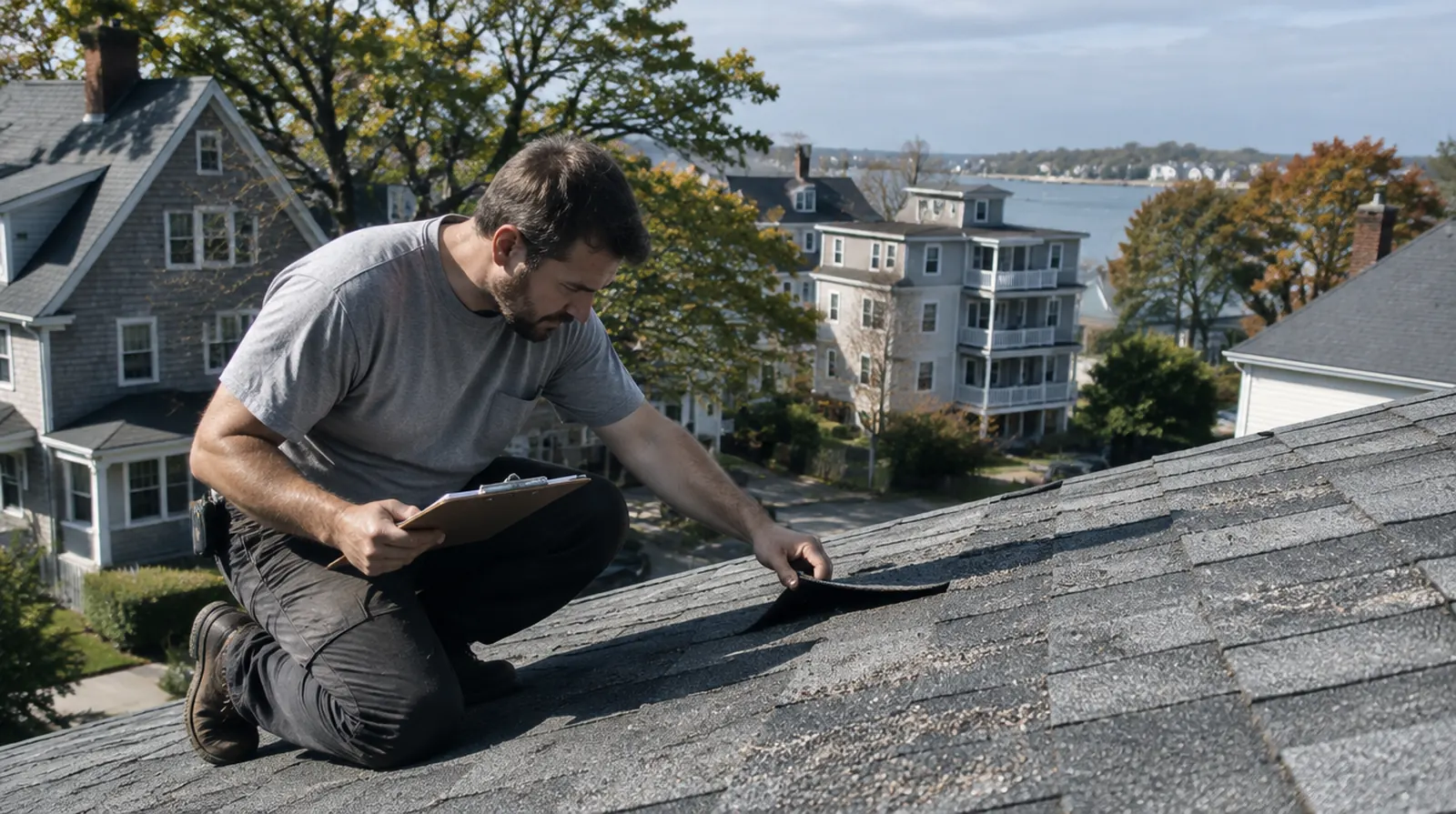
What our roof inspection looks at
On pitched roofs, we check shingles for granule loss, curling, cracking, lifted tabs and wind damage. We look closely at ridges, valleys and eaves, and at flashing around chimneys, dormers, skylights, walls and vent pipes. Brick chimneys are checked for cracked crowns, open mortar joints and failing flashing.
On low-slope roofs, common on Quincy's multi-families, we inspect the membrane for blisters, splits and open seams, check parapet flashing and coping, and look at every drain, scupper and hatch. Porch and bay roofs get the same attention. In the attic or top-floor spaces, we look for stains, frost marks, mold, damp insulation and ventilation problems.
When to schedule a roof inspection in Quincy
- Before buying a home or multi-family
- Before listing a property
- After a nor'easter or major snowstorm
- In spring, after a winter of ice dams
- Before adding solar
- When tenants report stains or drips
The inspection visit
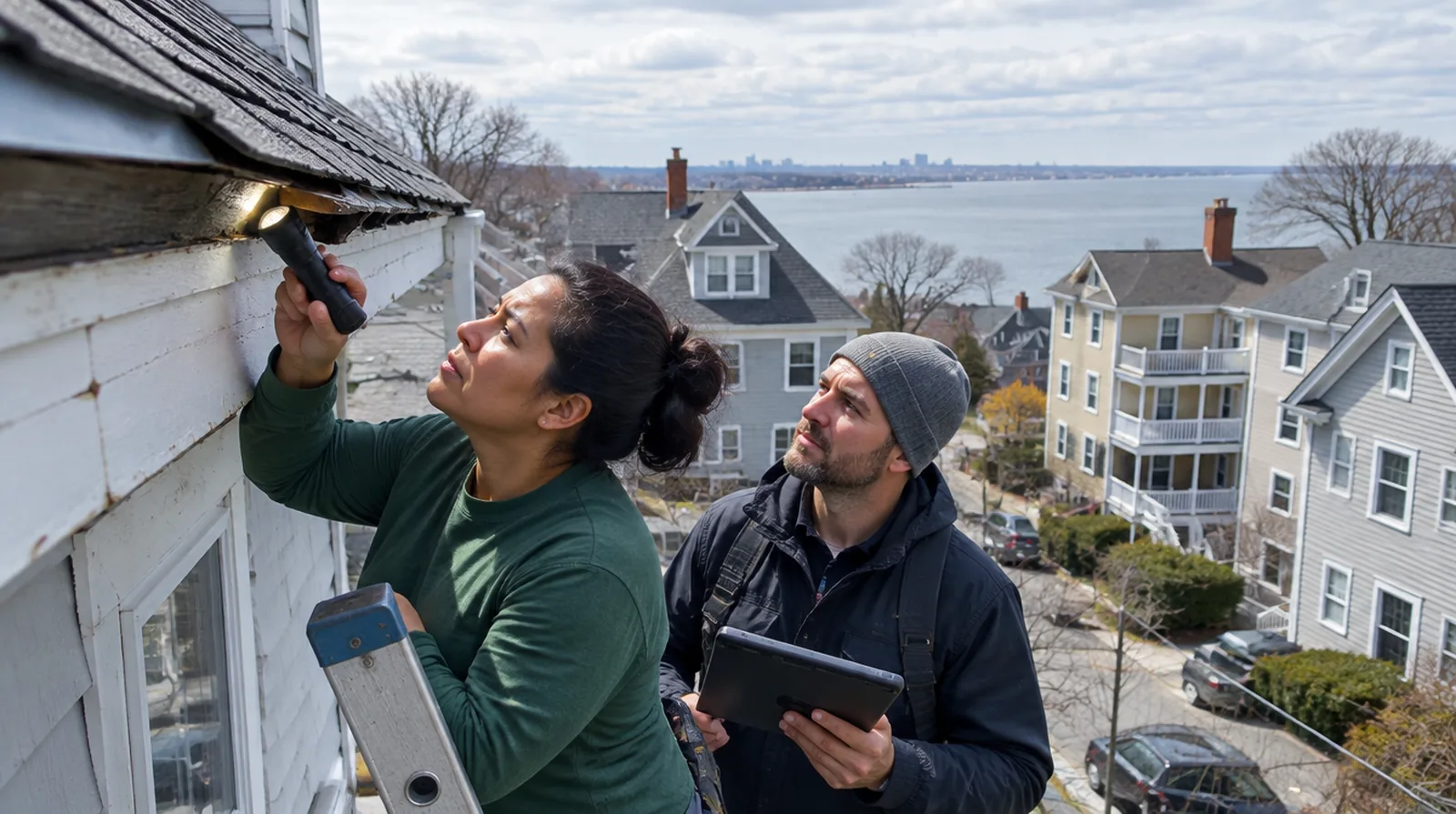
We walk the property and look at the roof from the ground first, then get on the roof and photograph each section. On multi-families, that includes the main roof, porch roofs and bays. Inside, we check reported stains and the attic or top-floor ceilings.
Your report groups findings by urgency: items to handle before next winter, items to monitor and areas in good shape. If you want a price for repairs or replacement, we can include one.
Roof inspection for multi-family buyers
For investors and owner-occupants buying a two- or three-family, the roof is one of the biggest unknowns. General home inspections often look at the main roof only from the hatch or not at all. We walk every section and tell you what to expect in the coming years, so you can plan and budget.
Spring checks after ice dams
After a hard winter, we look for shingle damage at the eaves, lifted flashing, bent gutters and signs of water in the attic. If ice dams were a problem, we explain the insulation and ventilation changes that address the cause, not just the symptoms.
Inspections before solar
Panels stay on a roof for many years. If the roof beneath will need work soon, do it first. We give an honest estimate of remaining roof life.
What the report includes
Every finding has a photo, a short description and a location on the building, so an owner, buyer, attorney or insurer can follow it without being on the roof. For multi-families, we label findings by roof section: main roof, front porches, rear porches and bays.
Chimneys, hatches and parapets
These three details cause a large share of the leaks we trace in Quincy's older buildings. During an inspection, we check crowns and mortar on every chimney, look at the curb and seal on roof hatches and inspect parapet caps and base flashing all the way around the roof. Small cracks in any of them are inexpensive to fix in fall and costly to ignore through a winter of snowmelt.
Inspections for landlords
For owners of rental two- and three-families, an inspection every year or two keeps small problems from turning into tenant complaints and ceiling repairs. We can schedule visits ahead of winter and coordinate access with tenants.
If the roof is covered in snow, we wait until it clears so we can see the actual surface. Plan on about an hour on site for a single-family home.
For condominium associations in converted two- and three-families, we can provide one report covering all roof sections so trustees can plan repairs together.
Roof inspection FAQs
How long does an inspection take?
About an hour for a single-family home, longer for a multi-family.
Do you inspect porch and bay roofs?
Yes, every roof section we can safely reach.
Can tenants let you in?
Yes, with the owner's permission.
How do I book?
Call (781) 773-2885.
Want a clear read on the roof?
Call (781) 773-2885 to schedule a roof inspection in Quincy.