Where metal makes the most sense on a Quincy house
Quincy's housing is a mix of eras packed onto small lots: Victorians and colonials on Wollaston Hill and President's Hill, triple-deckers on the tighter blocks of North Quincy and Quincy Point, and postwar capes and ranches toward the water. Each has spots where metal outperforms anything else.
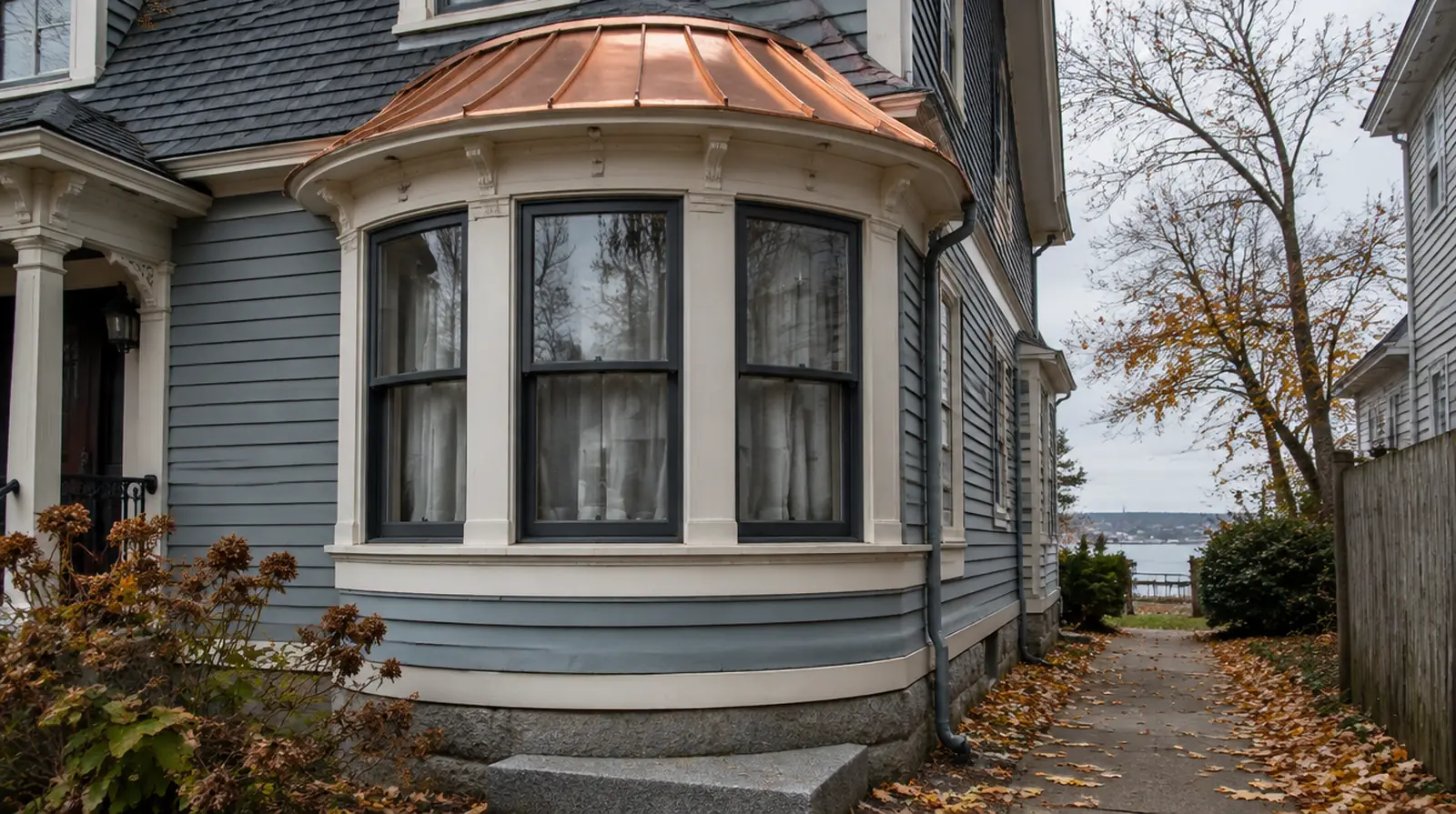
- Bay windows and turret caps. Curved and faceted roofs on older homes are hard to shingle neatly. Copper or painted steel can be formed to the shape and lasts far longer.
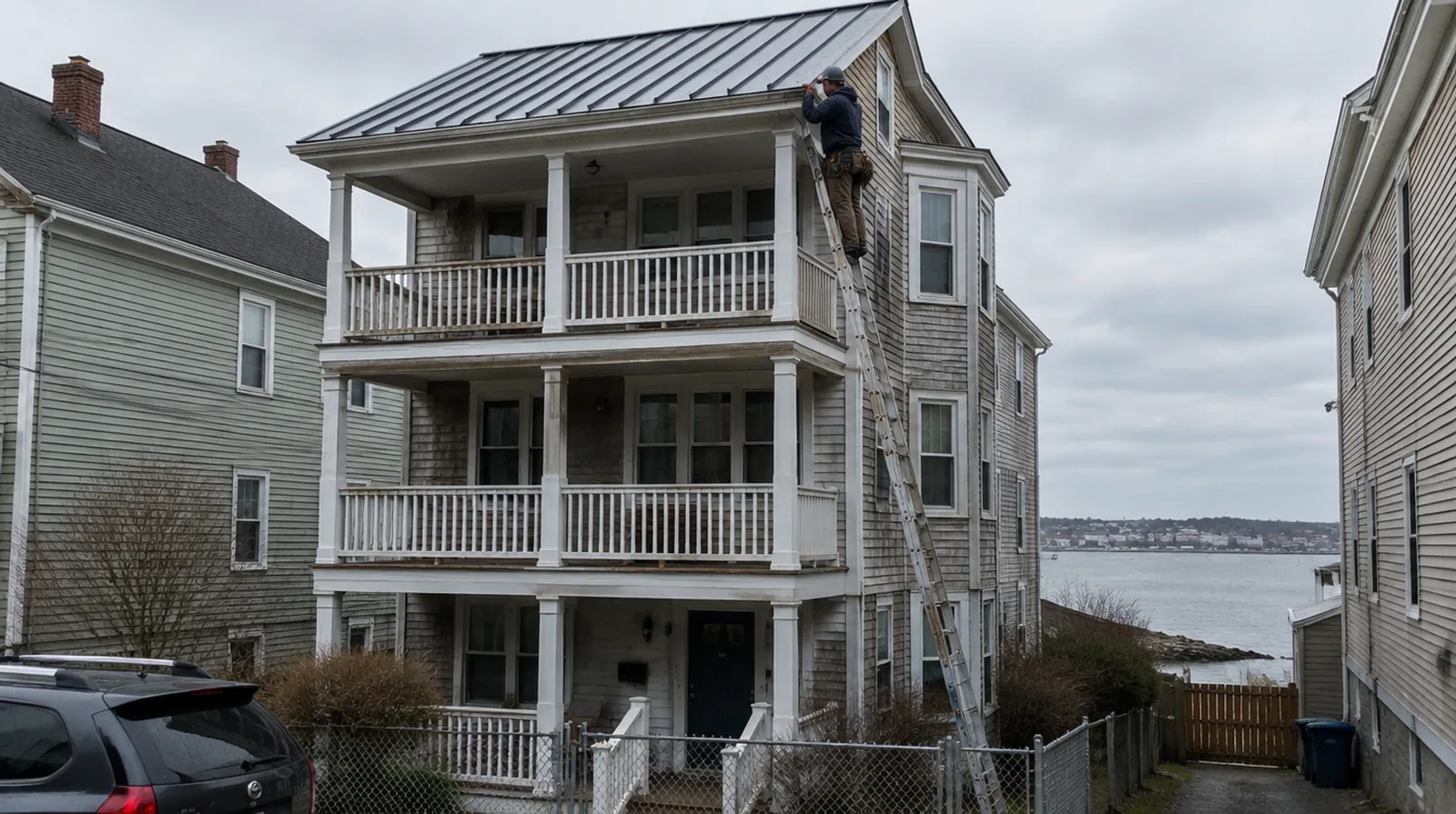
- Porch roofs on triple-deckers. Stacked porches usually have shallow roofs that hold water. Standing seam rated for low slope handles that pitch better than shingles do.
- Dormers and shed additions. Low-pitch rear dormers are a common leak spot. A metal roof on the dormer alone can end a recurring problem.
- Whole-house roofs. On capes, ranches and simpler gables, a full standing seam roof is a long-term option that sheds snow and rides out wind.
Choosing a metal that survives salt air
Near Squantum, Houghs Neck, Adams Shore and Marina Bay, roofs breathe salt every day, and salt finds any scratch in bare or poorly coated steel. That changes the material choice:
- Copper develops a brown and eventually green patina and does not need paint. It costs the most but is the traditional choice for historic accents.
- Aluminum does not rust, which makes it a strong pick for whole roofs within sight of the bay. It dents more easily than steel, so we use heavier panels.
- Painted steel with a PVDF finish works well a little farther inland. Some manufacturers limit their finish warranties close to salt water, so we check those terms for your address before quoting.
We also avoid mixing metals in ways that corrode. Copper water running onto aluminum or galvanized steel causes trouble, so flashing, fasteners and gutters are matched to the roof metal.
Winter on the South Shore
Nor'easters bring wind-driven rain that pushes sideways under shingle edges, followed by snow and ice that sit on the roof for days. Ice dams form at the eaves of older houses where attic insulation is thin. A metal roof sheds snow more readily and has far fewer seams where wind-blown water can get in. Under it we install a self-adhered ice barrier at every eave, valley and wall joint, because Massachusetts winters will test any weak spot. Where snow could slide onto steps, a neighbor's driveway or a lower porch roof, we add snow guards.
Permits and historic districts
Roofing work in the city needs a permit from Inspectional Services, which takes applications online. We file it and schedule any required inspections. If your house is in a local historic district, such as the Quincy Center or Adams Birthplace districts, re-roofing requires a Certificate of Appropriateness before work starts. Copper and standing seam often fit those reviews well, since metal was common on older buildings, but the approval still comes first. We prepare the material samples and photos for that review.
How the job goes
- We measure, photograph the roof and talk through which sections should be metal.
- Old roofing comes off, and any soft boards or rotted fascia are replaced.
- Ice barrier and underlayment go down, then edge trim and flashing.
- Panels are formed or cut, clipped and seamed. Copper bays are shaped and soldered on site where needed.
- We clean up, run a magnet over the yard and walk the finished roof with you.
Cost factors
Price depends on the metal (copper is the priciest, then aluminum, then painted steel), the size and pitch of the area, access on tight lots and the amount of custom forming. A small copper bay cap is a modest project. A full standing seam roof on a two-story house is a major investment, usually well above an asphalt replacement, but it can last decades longer.
Questions we get
Can you do metal on the porch and shingles on the main roof?
Yes, and it is one of our most common jobs. The two materials meet at flashed transitions.
Will copper stain my siding?
Runoff from copper can leave a green tint on light surfaces below. We plan drip edges and gutters to direct it away.
Is metal noisy on a triple-decker porch?
Over a solid deck and underlayment, rain sounds similar to a shingle roof.
For low-slope sections we can also compare metal with a membrane through our flat roof repair service, or start with a roof inspection.
Planning a metal roof or a copper accent?
Call (781) 773-2885 and we will look at the roof, talk through metals and give you a written estimate.